



Large Molecule Characterization
Overview
Biologics manufacturing is inherently complex—and structure drives function, impacting potency, stability, and immunogenicity.
We deliver comprehensive large-molecule characterization for peptides, oligonucleotides, proteins, antibodies, vaccines, and biologic/chemical conjugates. Our integrated analytical packages support CMC development, comparability assessments, and submission-ready documentation—helping you make confident, data-driven decisions from development through commercialization.

Services
-
Peptides
Confirm peptide identity and structural integrity with high-resolution MS and LC-MS/MS peptide mapping. Profile key attributes (sequence, PTMs, conjugation patterns) to support CMC development, comparability, and release decisions.
-
Oligonucleotides
End-to-End characterization for ASOs, siRNAs, and aptamers—mass/sequence confirmation and critical quality profiling. Add orthogonal higher-order structure and aggregation assessment to de-risk stability, formulation, and comparability.
-
Proteins
Comprehensive protein characterization from primary structure and PTMs to disulfide mapping and higher-order structure (HOS). Use orthogonal biophysical tools to assess conformational integrity, aggregation, and stability under relevant conditions.
-
Antibodies
Characterize mAbs and bispecifics with glycosylation, impurity, and stability/aggregation profiling aligned to CMC needs. For conjugated formats, integrate DAR and conjugation site characterization to support developability and comparability.
-
Vaccines
Analytical support for vaccines and viral modalities, including key RNA attributes (e.g., capping efficiency, poly(A) tail) and particle characterization. Quantify size distribution and empty/full ratios using orthogonal methods such as AUC and AF4-MALS.
-
Antibody Conjugates
ADC characterization for CMC and comparability, including DAR determination and free drug/related species monitoring. Identify conjugation sites with orthogonal workflows (e.g., LC-HRMS, HIC-UV) to strengthen product understanding.
Comprehensive Analytical Capabilities
Primary Structure • Higher-Order Structure (HOS) • Aggregates & Particles • Impurity Profiling • Primary Applications • Advanced Technologies
-
Primary Structure


Intact Mass & Identity: Accurate intact mass confirmation using high-resolution MS (e.g., Orbitrap, Q-TOF) to support molecule identity and batch comparability.
Sequence Confirmation: LC-MS/MS peptide mapping and sequencing workflows to verify the primary structure and detect sequence variants.
PTMs, Disulfides & Conjugation Mapping: Site-specific characterization of key attributes such as disulfide pairing, oxidation/deamidation, glycosylation, PEGylation, and lipid/fatty-acid modifications.
-
Finish Product
Secondary Structure:
Far-UV CD: Quantifies secondary structure content and detects conformational shifts.
FTIR: Orthogonal confirmation of secondary structure and structural stability trends.
Raman: Complementary spectroscopy to probe backbone and side-chain environments.
Tertiary Structure:
NMR (1D/2D, e.g., HSQC): Sensitive fingerprinting for HOS comparability and structural integrity.
Near-UV CD: Probes aromatic side chains and disulfides to assess folding and tertiary packing.
Intrinsic fluorescence: Tracks microenvironment changes to detect unfolding and conformational shifts.
Quaternary Structure:
DLS: Rapid size distribution screening and aggregation propensity monitoring.
SE-MALS: Absolute molecular weight determination and quantitation of monomer/fragment/aggregate species.
AF4-MALS: Broad-range separation for large aggregates and complex particles (e.g., VLPs) with minimal shear/adsorption.
AUC: Near-native solution profiling of oligomer/aggregate distributions—widely used for aggregation assessment.
NMR-DOSY: Differentiates species in solution based on diffusion behavior to support oligomer state analysis.
-
Aggregate and Particle Characterization
Quantitation and identification of soluble aggregates (dimers/oligomers) using SEC-(UV/MS) and SEC-MALS.
Broad-range particle profiling with AF4-MALS and AUC to understand size distribution and aggregation mechanisms.
-
Impurity Profiling
Process-Related Impurities
Product-related variants and process impurities: Resolve and identify closely related species using orthogonal separations (RP-HPLC, IEX, CE) coupled with MS as needed.
Residuals and exogenous contaminants: Assess typical process residuals (e.g., enzymes/reagents) and bioprocess impurities (e.g., HCP, residual DNA) with fit-for-purpose methods.
Degradation Pathways & Stability-Indicating Methods
Forced degradation studies to map key pathways (e.g., oxidation, deamidation, hydrolysis) and establish stability-indicating assays.
Challenging Impurity Resolution
Chiral impurity analysis: Dedicated methods to monitor racemization or stereochemical variants when relevant.
2D-LC (heart-cutting): Resolves co-eluting or peak-embedded impurities for confident identification.
MS-based quantitation: Targeted LC-MS workflows for low-UV/UV-silent impurities and trace variants.
-
Primary Applications
Biosimilar development: In-depth structural similarity assessment versus the reference product.
Process development & change control: Evaluate whether manufacturing changes impact critical structural attributes.
Formulation screening: Compare HOS and aggregation behavior across buffer/excipient conditions.
Stability studies: Track structural changes and degradation over time to support shelf-life decisions.
Lot release & QC: Support specification setting and routine monitoring for structure-related CQAs.
-
Advanced Technologies
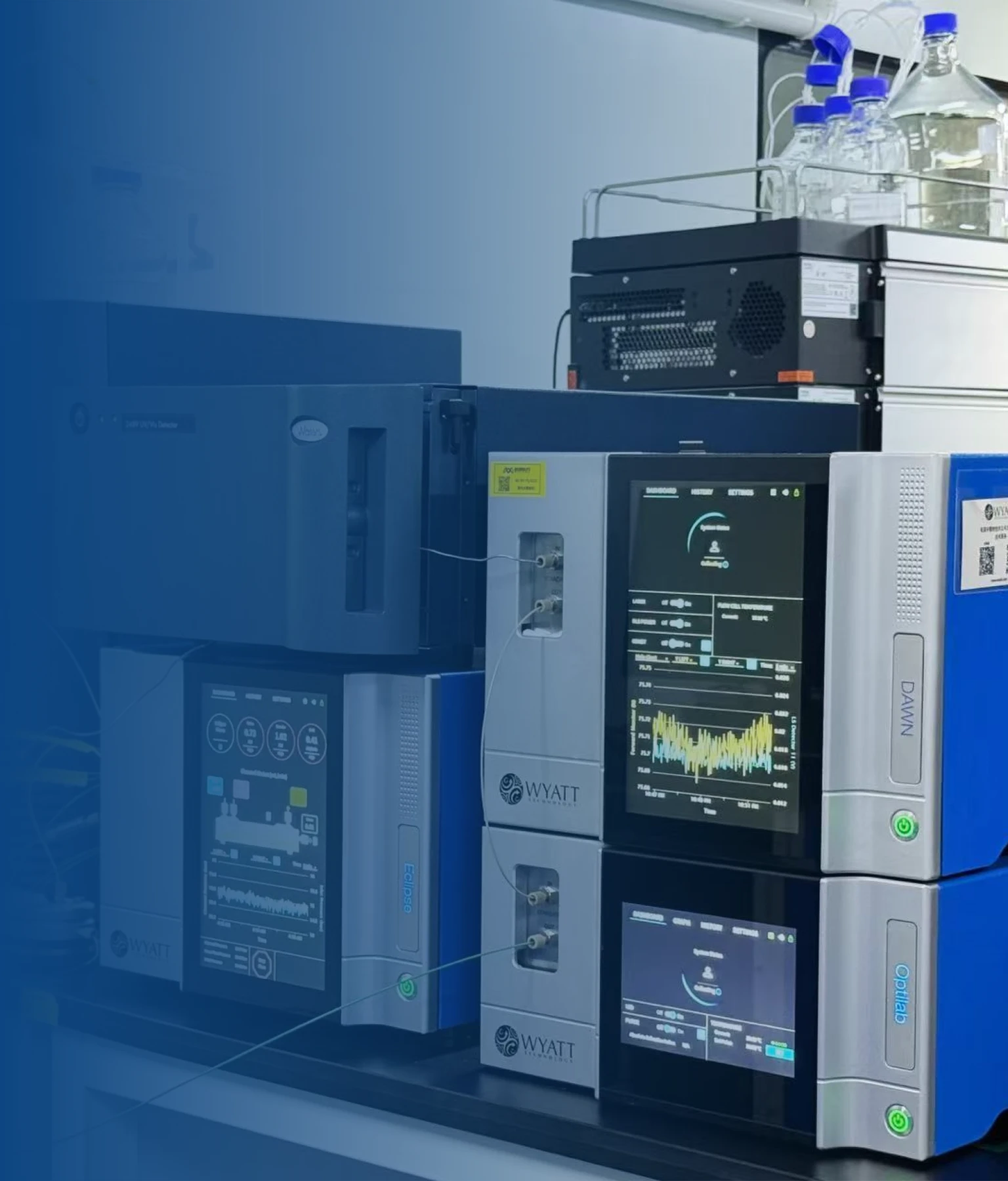
Biophysical & separation platforms: Far/Near-UV CD, FTIR, Raman, fluorescence, DLS, SEC-MALS, AF4-MALS, and AUC for orthogonal HOS and aggregation assessment.
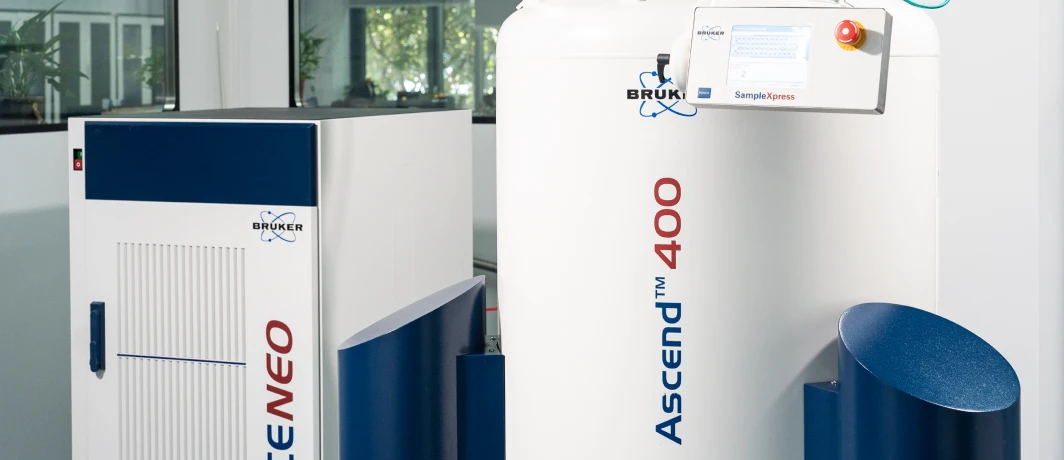
MS & NMR platforms: LC-HRMS (e.g., Orbitrap, Q-TOF), LC-MS/MS, and NMR (1D/2D, DOSY) to enable identity confirmation, structural elucidation, and comparability assessments.

Feature Strengths
-
Experienced Scientists, Practical Deliverables
From method development and impurity identification to submission-ready reporting, our scientists translate complex data into clear decisions for your program—especially for challenging modalities such as GLP-1 analogs and oligonucleotides.


-
One Partner Across Development Stages
Flexible service packages—from deep characterization to routine QC support—help you keep timelines on track while maintaining consistent methods, data integrity, and documentation.


-
Integrated Instrumentation for Orthogonal Evidence
We combine high-resolution mass spectrometry, multi-dimensional NMR, biophysical spectroscopy, AUC, and AF4/SEC-MALS to build an orthogonal data package that improves confidence in structure and comparability conclusions.


-
Quality Systems Aligned with Global Expectations
Our workflows and reporting are designed to support global filings and audits, with documentation practices aligned to cGMP and widely adopted guidelines (e.g., ICH, USP/EP and 21 CFR Part 11 where applicable).
FAQ
-
Which orthogonal methods do you use for higher-order structure (HOS) assessment?
We combine far/near-UV CD, FTIR, fluorescence, NMR (1D/2D), DSC, SEC-MALS/AF4-MALS, and AUC to profile secondary/tertiary structure, conformational stability, and aggregation under near-native conditions.
-
How do you ensure accurate primary structure characterization for biologics?
We build orthogonal evidence using intact mass by HRMS (e.g., Orbitrap, Q-TOF), LC-MS/MS peptide mapping for sequence confirmation, and targeted PTM/disulfide/conjugation analysis to verify identity and structural fidelity.
-
Can your characterization package support comparability studies and global regulatory submissions?
Yes. Our integrated analytical packages are designed to support CMC development, process change evaluation, biosimilar comparability, formulation screening, stability studies, and submission-ready documentation for global regulatory filings.
-
What types of large molecules and complex modalities can you characterize?
We support a broad range of modalities, including peptides, oligonucleotides, proteins, monoclonal and bispecific antibodies, vaccines, viral particles, VLPs, and antibody-drug conjugates. For complex formats, we can integrate DAR analysis, conjugation-site mapping, glycosylation profiling, impurity analysis, and particle characterization.
Discuss My Project
Speak with an expert about your upcoming project to see how we can help you.