







In Vitro BE for Nasal Suspension Sprays: A Comprehensive Solution from Milestone Pharma for Waiving Clinical Studies
Following the FDA’s issuance of the Mometasone Furoate Product-Specific Guidance (PSG_020762) in May 2023, the bioequivalence evaluation pathway for mometasone furoate nasal spray has become more clearly defined.
China has also adopted a similar regulatory approach. In June 2024, the Center for Drug Evaluation (CDE) officially issued the Technical Guideline for Pharmaceutical Research of Suspension Nasal Sprays for Generic Chemical Drugs. The guideline provides a clear technical framework for generic drug manufacturers conducting pharmaceutical research and seeking a biowaiver, indicating that the FDA’s weight-of-evidence approach has also been incorporated into the domestic regulatory framework.
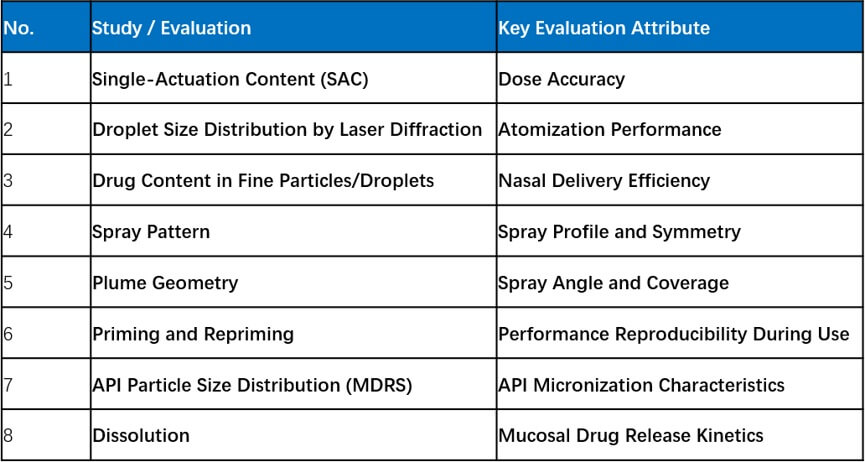
For products with identical Q1/Q2 formulations and comparable delivery devices, Option 1 (in vitro BE-only pathway) provides a scientifically sound, efficient, and cost-effective regulatory pathway. Under this approach, in vivo pharmacokinetic (PK) studies and comparative clinical endpoint studies are not required, and BE can be evaluated through eight in vitro studies.
01 Why Choose the In Vitro BE Pathway?
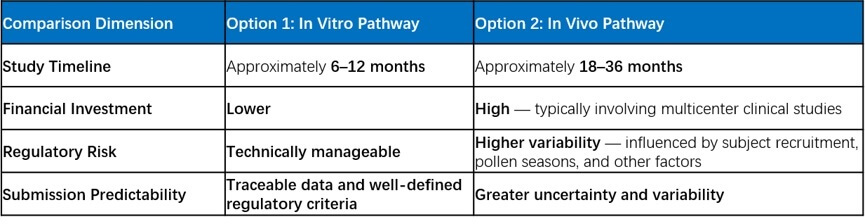
Key Prerequisites
The test (T) and reference (R) products must have identical Q1 composition (types of excipients) and Q2 composition (amounts of excipients), with comparable delivery device designs.
02 Overview of the Eight In Vitro BE Studies
The FDA guidance specifies the following eight in vitro studies as part of the evaluation pathway:
03 Key Technical Highlights
Highlight 1: MDRS — The “Gold Standard” for API Particle Size Characterization
Why Is MDRS Required?
• Mometasone furoate is formulated as a suspension, and API particle size directly affects solubility and dissolution/release rate.
• Studies have demonstrated that differences in API particle size (Dv50 of 3.17 μm vs. 5.50 μm) can result in approximately 45% differences in Cmax and AUC.
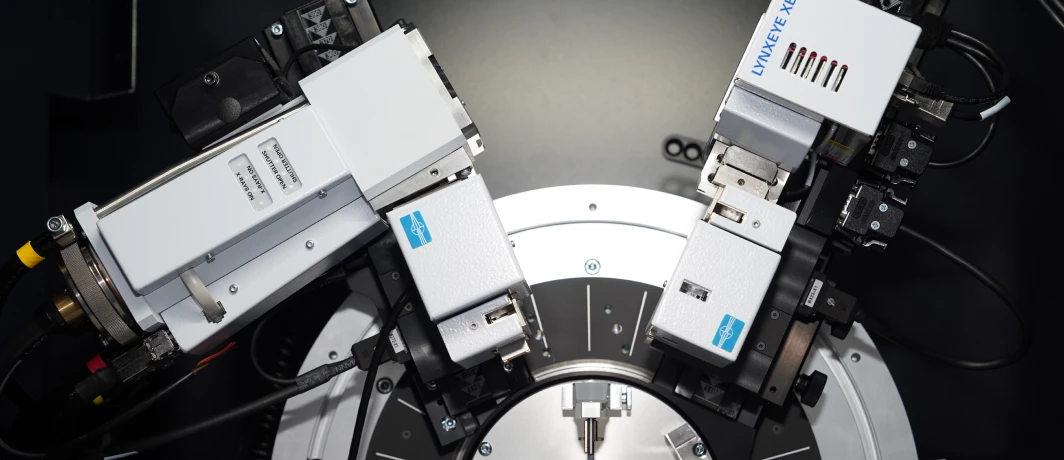
• In 2016, the FDA accepted MDRS (Morphologically Directed Raman Spectroscopy) for ANDA submissions for this product, providing an alternative to comparative clinical endpoint BE studies.
What Can MDRS Do?
• Automated particle morphology analysis — providing information on particle shape and size.
• Raman spectroscopic chemical identification — determining the chemical identity and composition of individual particles.
• Specific identification of API particles, minimizing interference from excipients such as microcrystalline cellulose.
• Generation of particle-level correlated data linking morphology, particle size, and chemical composition.
Highlight 2: Dissolution — A Key Parameter Added in 2023
Dissolution testing was introduced as a new requirement in the 2023 guidance and is directly associated with API particle size and systemic bioavailability.
Orthogonal Verification of Particle Size and Dissolution
MDRS characterization of API particle size distribution → Prediction of dissolution behavior → Dissolution testing for functional verification → Cross-corroboration of BE equivalence
Dissolution testing provides functional verification of the MDRS findings, while MDRS data can help explain the underlying causes of observed dissolution differences. Together, these complementary approaches provide stronger scientific support and enhance the overall robustness of the regulatory submission package.
04 Why Choose Milestone Pharma?
China’s First Third-Party Laboratory to Obtain CNAS Accreditation for Inhalation and Nasal Spray Characterization
To our knowledge, Milestone Pharma is the first third-party laboratory in China to obtain CNAS accreditation for the evaluation of spray characteristics of inhalation and nasal drug products.
Comprehensive International Regulatory Compliance
• Successfully passed an FDA inspection
• Successfully passed EU Qualified Person (QP) audits
• Successfully passed multiple CFDI on-site inspections for drug registration
Data Integrity Compliant with FDA 21 CFR Part 11
• Networked Chromatography Data System (CDS)
• Electronic Document Management System (DMS)
• Automated data backup system
• Comprehensive computerized system lifecycle management
Extensive Project Experience
• 300+ in vitro evaluation projects completed, with no deficiencies identified in submitted regulatory dossiers
• Successfully completed 500+ client audits and on-site assessments
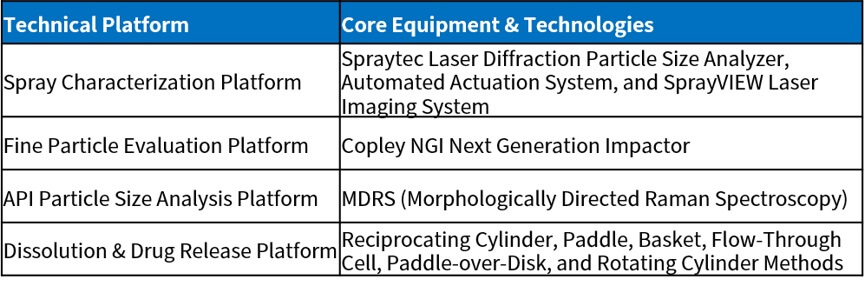
Comprehensive Technical Platform
Statistical Analysis Capabilities
Milestone Pharma applies Population Bioequivalence (PBE) statistical approaches recommended by the FDA:
• Establishment of one-sided and two-sided PBE models, as well as Average Bioequivalence (ABE) models.
• Extensive experience with the PBE bioequivalence criterion (θp = 2.0891) and associated equivalence assessment requirements.
• Statistical analysis of overall means and within-batch/between-batch variability of in vitro data following appropriate logarithmic transformation.
• Statistical analyses performed using licensed statistical software.
05 Conclusion
For suspension nasal sprays such as mometasone furoate nasal spray, the Option 1 in vitro BE pathway provides an efficient approach to regulatory development and submission.
• Prerequisites: Identical Q1/Q2 composition + comparable delivery device
• Core strategy: Orthogonal evaluation using MDRS + dissolution testing + laser diffraction particle size analysis
• Quality and compliance assurance: CNAS-accredited laboratory capabilities + FDA inspection experience + EU QP audit experience + a comprehensive data integrity and compliance system
Through a comprehensive in vitro BE testing framework, Milestone Pharma helps clients systematically evaluate formulation, particle size, spray performance, dissolution behavior, and delivery device performance of suspension nasal sprays, providing technical support for generic drug BE assessment, clinical study waiver strategies, and global regulatory submissions.

