



Chemically synthesized peptides typically contain multiple chiral centers. During amino acid activation, coupling, deprotection, and post-processing, some residues may undergo racemization or epimerization, forming epimeric peptide impurities containing D-amino acid residues. Epimeric peptides share the same molecular formula and exact mass as the target peptide, with highly similar physicochemical properties, making their separation and identification far more challenging than ordinary impurities. This is a well-recognized bottleneck in peptide drug quality research.
Milestone Pharma Deuterated Hydrolysis + FDAA Chiral Derivatization + LC-HRMS analytical technology platform can accurately determine the D-amino acid content of each residue in peptide APIs and drug products, with detection limits as low as 0.1%, providing critical data support for process optimization, impurity research, and stability evaluation.
01 Reasons for the Formation of D-Configuration Amino Acids
The sources of D-configuration amino acids in peptide drugs can be categorized into three types: synthesis-induced racemization, degradation-induced racemization, and sample preparation-induced artifactual inversion. Identifying the source is a prerequisite for developing targeted control strategies.
Synthesis-Induced Racemization (SPPS)
In solid-phase peptide synthesis (SPPS), amino acid activation and coupling is the high-risk step for racemization, with main pathways including:
- Oxazolone (5(4H)-Oxazolone) intermediate pathway: The activated amino acid carbonyl cyclizes with the backbone nitrogen to form a planar intermediate, transiently losing chirality at the α-carbon. This is the primary racemization pathway in SPPS.
- Direct enolization pathway: Base abstracts the α-proton to form an enol intermediate, losing stereochemical control. Cys is particularly susceptible.
- Aspartimide pathway: Asp/Asn side chain cyclizes with the downstream amide nitrogen to form a five-membered ring imide, accompanied by α-carbon racemization upon ring opening.
High-risk residue ranking: His > Cys > Ser > Asp/Asn > Phe. Coupling reagents, activation time, base strength, and temperature all affect the degree of racemization.
Degradation-Induced Racemization (Storage & Stability)
Peptide drugs may still undergo progressive racemization during storage and transportation. Degradation-induced racemization is a thermodynamically driven spontaneous inversion. Even if chiral purity is acceptable at release, detectable D-amino acids may still appear by end of shelf life:
- Asp/Asn succinimide mechanism: Asp side chain cyclizes with downstream amide nitrogen to form a succinimide intermediate, which opens to generate four isomers (Lα-Asp, Lβ-Asp, Dα-Asp, Dβ-Asp), with D-form accumulation being time-dependent.
- Progressive racemization of Ser: Ser α-proton is relatively acidic, easily deprotonated under weak base or high temperature, making it a key racemization-sensitive site to monitor.
- Temperature and pH acceleration: Racemization rate increases with temperature (Arrhenius relationship); alkaline conditions catalyze α-proton abstraction.
Traditional acid hydrolysis conditions themselves cause 0.5%-2% racemization, producing D-amino acids known as hydrolysis artifacts, leading to inflated results. Deuterated hydrolysis technology distinguishes native from secondary D-amino acids through isotopic labeling.
02 Core Technologies
Deuterated HCl/D2O Hydrolysis - Reducing False Positives:
During acid hydrolysis, some amino acids undergo racemization, producing additional D-amino acids that interfere with original content determination. After hydrolysis with deuterated reagents, amino acids that racemize during hydrolysis have their α-carbon labeled with deuterium (mass +1 Da). This can be clearly distinguished using high-resolution mass spectrometry (HRMS).
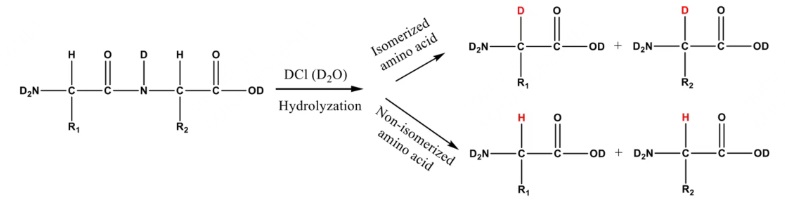
The Principle of Deuterated Hydrochloric Acid Hydrolysis of Peptides
Using the common derivatization reagent N-α-(2,4-dinitro-5-fluorophenyl)-L-alaninamide (FDAA) as an example, the analytical principle involves forming derivative products where the amide group on FDAA forms stronger intramolecular hydrogen bonds with the free carboxyl group of amino acids, enabling good separation of D/L amino acid derivatives on C18 reversed-phase columns without the need for dedicated chiral columns, offering broad applicability.
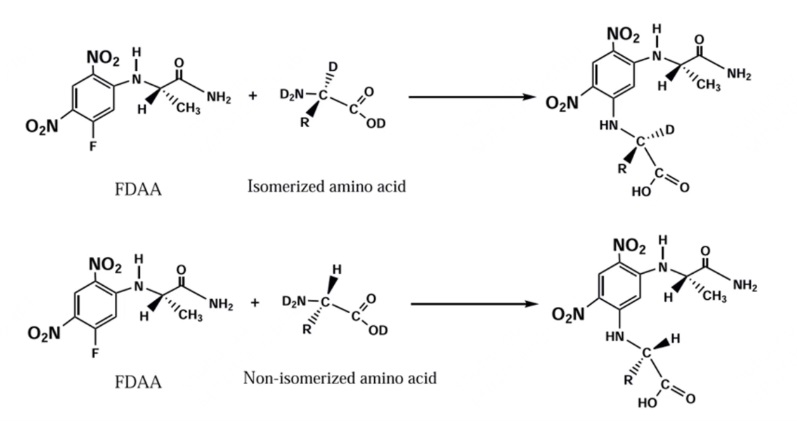
Mechanism of FDAA Chiral Derivatization of Amino Acids
High-Resolution LC-HRMS Analysis—Achieving Both Sensitivity and Specificity
Combined with high-resolution mass spectrometry exact mass extraction and isotope pattern discrimination, simultaneous achievement of:
Amino acid content detection as low as 0.1% (relative to corresponding L-amino acid);
Target peak confirmation in complex matrices, avoiding false positives.

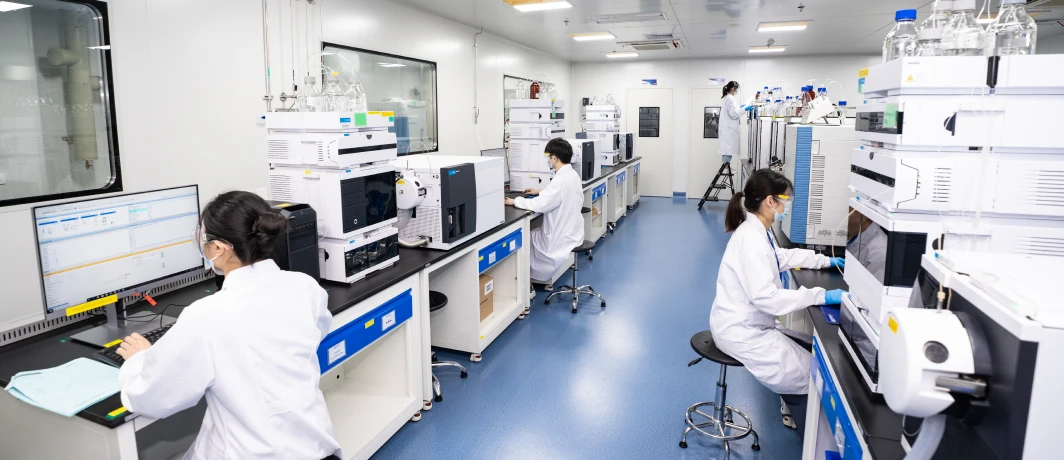
From left to right: Vanquish Flex UHPLC, QE Plus, CHROMELEON software
Overcoming Interference from Formulation Excipients: More Than Just Active Pharmaceutical IngredientsPeptide formulations often contain large amounts of excipients that may affect hydrolysis, derivatization, and mass spectrometry ionization, causing chromatographic co-elution, response suppression, or background interference. For different formulation prescriptions, Milestone Pharma effectively reduces formulation matrix interference through sample cleanup, excipient interference investigation, derivatization condition optimization, chromatographic separation, and HRMS exact mass extraction; combined with spike recovery, precision, specificity, quantitation limit, and matrix effect evaluation to ensure reliable detection results.
03 Application Case
Determination of D-Amino Acid Content in Semaglutide Injection
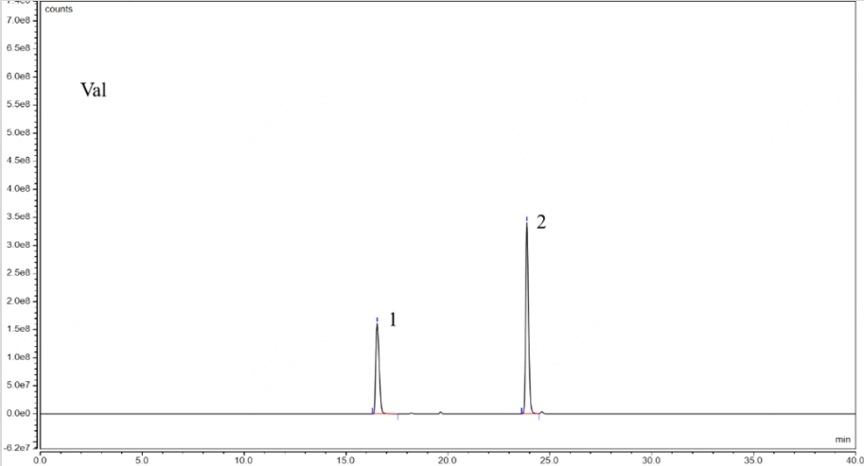
Extraction ion charts (Val) for amino acid reference standard solutions
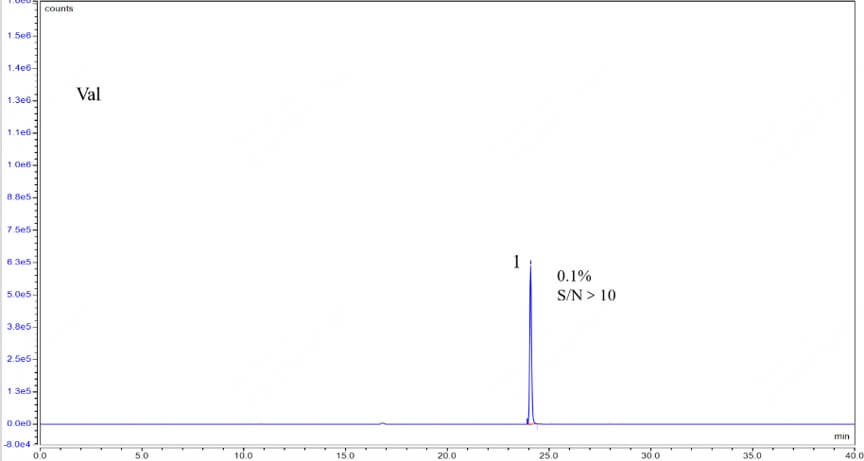
Ion Chromatogram (Val) of the Sensitivity Solution
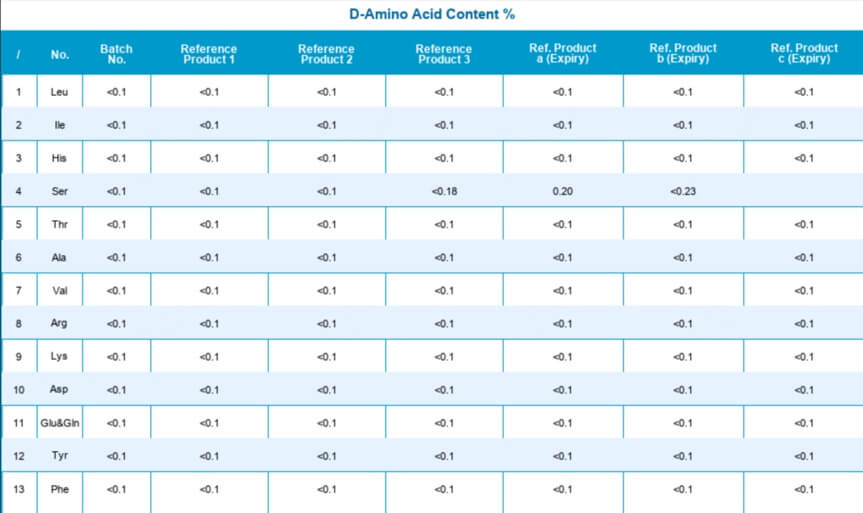
Results of the determination of D-amino acid content in Semaglutide Injection:
04 Platform Advantages and Service Value
End-to-end, one-stop service that incorporates customized optimization
We cover the entire process, from hydrolysis and derivatization to the development and validation of LC-HRMS methods; at the same time, we can tailor hydrolysis conditions, derivatization parameters, and chromatographic separation strategies to the specific molecular characteristics of each client’s samples, thereby enhancing the reliability of the analytical data.
Highly Efficient, Low-Cost Strategies to Accelerate the R&D Process.
By adopting a “screen first, confirm later” approach, the method significantly reduces the amount of dipeptide reference standards required, resulting in substantial savings in time and financial resources and lowering the barriers to early-stage R&D.
Comprehensive compliance verification system supporting international registration
Method development strictly adheres to guidelines from the EMA, USP, CDE, ICH, and other organizations. Comprehensive validation—including specificity, linearity, accuracy, precision, detection limits, and quantification limits—is systematically conducted to ensure data integrity and traceability, enabling seamless alignment with domestic and international new drug applications and post-marketing changes.
Widely applicable, covering a wide range of peptide structures
Suitable for the synthesis of peptides of various sequence lengths, including GLP-1 analogs, cyclic peptides, and peptide-drug conjugates (PDCs), to meet diverse project needs.