








An Analysis of BioPhorum’s Latest 2026 White Paper
Introduction: Why Your “Compliant” Approach May Still Fall Short
In the world of sterile drug packaging, even a tiny leak can trigger a recall crisis. From clinical trials to commercial production, Container Closure Integrity (CCI) testing is no longer merely a “rutine” compliance exercise—it is a core quality barrier that ensures product safety throughout the entire product lifecycle.
However, the reality is that many pharmaceutical companies still harbor profound misconceptions regarding CCI method validation:
•“Conducting vacuum decay testing is equivalent to method validation”
•“It’s fine to use the same set of standards for both clinical and commercial phases”
•“A laser-perforated sample is sufficient as a positive control; nothing else is needed”
•“The dye infiltration method is outdated and should be phased out”
BioPhorum’s latest white paper, CCI Method Validation and Common Misconceptions (released in 2026), was co-authored by experts from leading global pharmaceutical companies such as Amgen, AstraZeneca, Novo Nordisk, GSK, and Regeneron. It systematically outlines the full-process framework from method development to validation acceptance criteria. Here are the seven key points you need to know.
I. GSP vs. Validated Methods: Have You Chosen the Right One?
The white paper begins by clarifying one of the most common misconceptions: full method validation is not required at every stage.
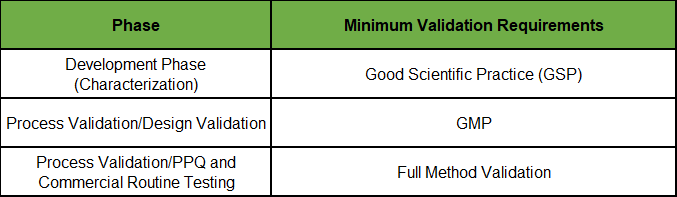
Key Differences: - GSP requires compliance with the basic requirements of USP <1207>—equipment must be validated, and methods must include system suitability testing. - Method validation, on the other hand, requires demonstrating that the method has an acceptable measurement system analysis (MSA), meets predefined acceptance criteria, and complies with the requirements of ICH Q2(R2) and USP <1225>.
Practical Tip: Stability testing during the clinical phase allows for more flexible platform methods, but full validation is mandatory during the commercial production phase—in FDA NDA/BLA submissions, the ability of CCI methods to detect defects must be ≤20 μm.
II. Seven Performance Characteristics of Method Validation
According to USP <1207.1> and ICH Q2(R2), CCI method validation must evaluate the following performance characteristics:
1. Accuracy
100% of negative samples pass and 100% of positive samples are detected—no ambiguous results.
2. Precision
Validate the method’s repeatability and reproducibility through Gage R&R analysis. The probabilistic approach requires determining statistical confidence levels and reliability based on a risk assessment.
3. Specificity
The method must accurately distinguish between leaking and non-leaking samples, eliminating false positives and false negatives.
4. Detection Limit (LOD)
The minimum leak rate or defect size that the method can reliably detect. For deterministic methods, the detection limit is defined as the smallest defect size detected 100% of the time; for probabilistic methods, it must be supported by a risk assessment.
5. Range
The range between the detection limit and the maximum defect size that the method can detect. Don’t forget—large leaks must also be detectable!
6. Robustness
The method’s ability to withstand minor variations in procedural parameters. For example, in the dye intrusion method, slight fluctuations in incubation time or pressure differential should not affect the results.
7. Response
The degree to which the method’s output varies with defect size. Ideally, R² ≥ 0.95, and the method should be able to distinguish between at least three different leak sizes.
Key Reminder: Not all performance characteristics apply to every method. Linearity and range can be demonstrated through characterization studies during the method development phase and do not necessarily need to be repeated during formal validation.
III. “Bracketing”: A Smart Validation Strategy
If your product has multiple specifications or container types, conducting a full validation for each one is clearly impractical. The Bracketing strategy recommended in the white paper can significantly improve efficiency:
Core Logic: - Select the worst-case parameters for full validation - For other specifications within the validation range, suitability can be demonstrated through truncated studies
Key Parameters to Consider: - Gas concentration (e.g., headspace gas analysis methods) - Fill level/fill volume - Sample viscosity (high-viscosity products may represent the worst-case scenario, as they could block leakage pathways)
Note: It is not necessary to include all possible variables in the bracketing—focus on parameters that have a significant impact on test results.
IV. Positive Controls: More Than Just Laser Perforation
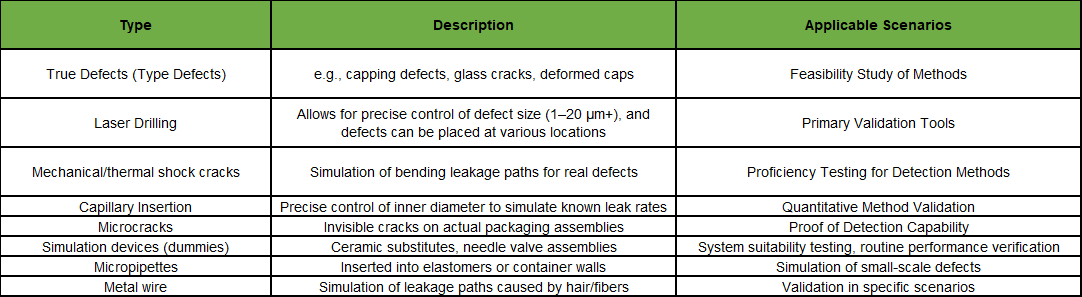
Positive controls are the cornerstone of CCI validation, but the white paper reveals a “toolkit” of positive controls that is far more extensive than one might imagine:
Practical Tips: - Modern laser-drilling technology creates a melt zone and a network of microcracks, more closely mimicking real defects - The effective flow diameter of a capillary tube can vary significantly with length (a 1 cm difference in length can result in a leak rate reduction of over 50%) - Simulation setups are not suitable for formal validation but are ideal for routine system verification.
V. A Deadly Pitfall—Occlusion
This may be the most easily overlooked “silent killer” in CCI validation.
What is occlusion? When product liquid flows out through a leak path and then dries, it forms a “plug” or coating inside the leak channel, leading to: - Narrowing or even complete blockage of the leak path - Positive controls potentially turning “negative” over time - A dangerous situation where there is a risk of microbial ingress that CCIT testing cannot detect.
Which products are at higher risk? - Products prone to occlusion: protein solutions, sugar-containing formulations - Products less prone to occlusion: Water for Injection (WFI)
Mitigation Strategies: - Conduct dedicated clogging studies for high-risk products - Verify the status of positive controls prior to validation - Use fresh laser-perforated defects, paying attention to their expiration dates - Laser-perforated defects may still become clogged during storage and use.
VI. Clinical vs. Commercial: Validation Logic in Two Different Worlds
The white paper clearly distinguishes the validation differences between the clinical and commercial phases in a single table:
Key Conclusion: Data and experience from the clinical phase can support commercial validation, but the standards for the two should not be conflated.
VII. Clarification of Common Misconceptions
Misconception 1: “Deterministic methods are always superior to probabilistic methods”
Truth: Deterministic methods (such as vacuum decay and high-voltage discharge leak detection) are indeed more objective and repeatable, but probabilistic methods (such as dye penetration) remain applicable in specific scenarios—provided they have been thoroughly validated and are scientifically grounded.
Misconception 2: “HVLD can detect all defects”
Fact: High-voltage discharge leak detection is effective for conductive liquids but is not suitable for flexible packaging; there is a non-linear relationship between signal strength and defect size; and detection blind spots may occur when the container has a complex geometry.
Misconception 3: “The dye penetration method has been phased out”
Fact: The dye penetration method remains valuable in certain scenarios (such as transparent packaging and fully sealed container testing). Its main limitations lie in container opacity and analyst subjectivity, not in the method’s inherent ineffectiveness.
Misconception 4: “Detection Limit = MALL”
Fact: The limit of detection (LoD) is the smallest leak that the method can detect; the maximum allowable leak rate (MALL) is the threshold for ensuring sterility. The MALL for packaging compliance (e.g., the Kirsch limit of 6×10⁻⁶ mbar·L/s) is not equivalent to the sensitivity required for routine testing.
Misconception 5: “Using the actual product as a negative control is sufficient”
Fact: Actual products are not inherently defect-free (especially after shipping). Negative controls should represent components in their optimal assembly state, which requires dedicated process control.
Conclusion: A Risk-Based CCI Validation Framework
The core message of the BioPhorum white paper can be summarized as follows: there is no one-size-fits-all approach. Successful CCI validation depends on the following five-step decision-making framework:
1.Define the intended use: development, release, or stability? Clinical or commercial?
2.Assess product and container characteristics: viscosity, conductivity, fill volume, geometry
3.Evaluate method capabilities and limitations: Consult USP <1207>, PDA TR 27, and ASTM standards
4.Consider the lifecycle and transferability: Will the method be transferred across sites? How will the scale vary?
5.Justify and document decisions: Support method selection with risk assessments and be prepared for audits
The final CCI strategy should be: - Conduct feasibility assessments early in development - Use a combination of complementary methods
where appropriate - Document known limitations and mitigation strategies - Treat regulatory guidance as a framework rather than a “prescription” - Align method selection with product risk, life cycle stage, and operational feasibility
Reference: BioPhorum Operations Group Ltd. (2026). Container Closure Integrity: Method Validation and Misconceptions. https://doi.org/10.46220/2025FF008
This article is intended solely as a technical interpretation and does not constitute regulatory advice. Specific validation strategies should be developed in accordance with product characteristics and regulatory requirements.

