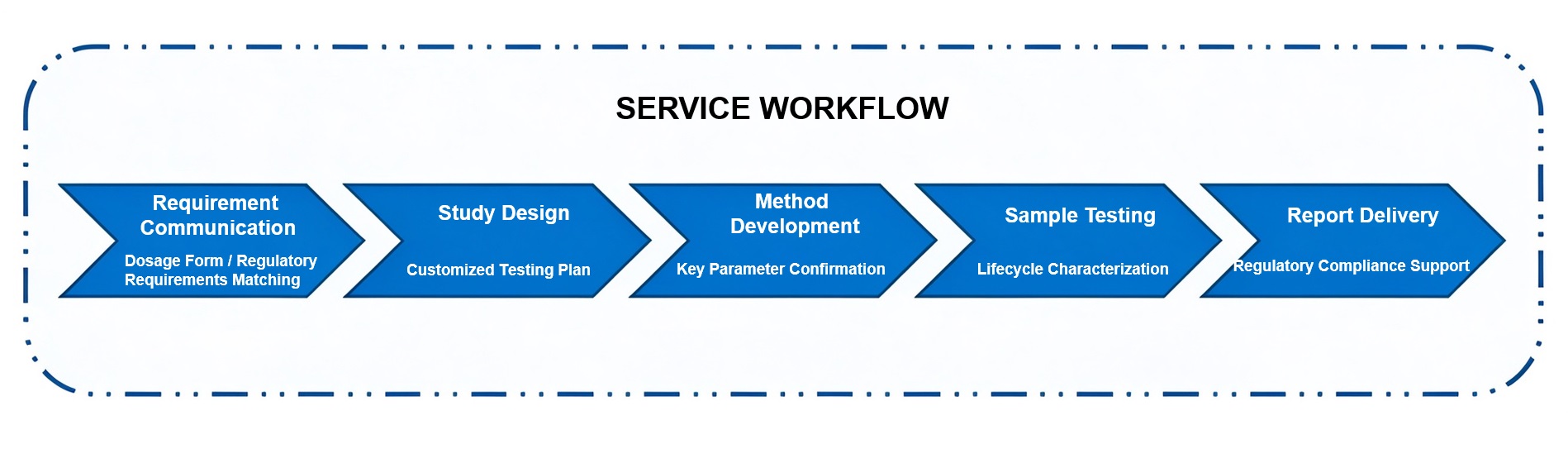








Milestone Pharma's one-stop in vitro pharmaceutical research services for inhalation products closely follow the latest regulatory trends reflected in the FDA's centralized update of 18 inhalation product-specific guidances (PSGs). As in vitro BE evaluation enters the era of rAPSD and dissolution, our capabilities comprehensively cover in vitro characterization and quality research for a full range of dosage forms, including pressurized metered-dose inhalers, dry powder inhalers, soft mist inhalers, and nasal sprays, providing technical support aligned with international regulatory standards for the equivalence evaluation and generic development of inhalation products.
Core Dosage Forms · Full-Scenario Coverage
Covers the in vitro characterization technologies required throughout the lifecycle of inhalation products, with solutions tailored to the specific regulatory requirements of different dosage forms.
pMDI/Pressurized Metered-Dose Inhaler
A pressurized metered-dose inhaler (pMDI) formulation, covering key characterization parameters including SAC, APSD, Spray Pattern, Plume Geometry, Priming & Repriming, Realistic APSD (rAPSD), and Dissolution.
DPI/Dry Powder Inhaler
SAC · APSD · rAPSD · MDRS · Dissolution (Comparative Physicochemical Characterization Studies).
Soft Mist Inhaler/SMI
Comprehensive characterization solutions including SAC · APSD · Spray Pattern · Plume Geometry · Spray Duration · Spray Velocity.
Nasal Suspension Spray
SAC · Droplet Size Distribution · Small Droplet Drug Mass · Spray Pattern · Plume Geometry · Priming & Repriming · API Particle Size Distribution · Dissolution.
Core In Vitro Characterization Capabilities
Covers the requirements of the latest FDA guidance, providing comprehensive support for generic drug BE evaluation and formulation screening for new drug development.
| No. | Item | Description |
|---|---|---|
| 1 | Single Actuation Content | Dose consistency across the Beginning, Middle, and End stages of the container Supports B / M / E stage testing throughout the product lifecycle. |
| 2 | Aerodynamic Particle Size Distribution | NGI cascade impactor method Realistic APSD (rAPSD): multiple mouth-throat models + breathing profiles |
| 3 | Spray Pattern | Ovality & symmetry (ellipticity and symmetry) Ovality, area, and intensity distribution maps Time-resolved Spray Pattern acquisition |
| 4 | Plume Geometry | Spray angle · width · dispersion profile Multi-distance plume front measurement High-speed imaging visualization and analysis |
| 5 | Priming & Repriming | Simulation of real-world use conditions Evaluation of dose consistency during initial actuation and after repriming |
| 6 | Plume Front Velocity (PFV) | High-speed imaging-based calculation of plume front velocity Measured at a distance of 8–12 cm from the nozzle · Beginning (B) / End (E) stages of the container |
| 7 | Spray Duration | Time window from actuation initiation to completion |
| 8 | Spray Evaporation Rate | Multi-distance evaporation kinetics at 10–60 mm from the nozzle Six time points (6T) for time-resolved evaporation rate curves |
| 9 | Droplet Size Distribution by Laser Diffraction | Determination of Dv10 / Dv50 / Dv90 and SPAN by laser diffraction Time-resolved droplet size evolution curves |
| 10 | In Vitro Dissolution | Sink condition verification and dissolution medium screening Pulmonary drug release kinetics studies |
| 11 | Microscopic API Particle Size Distribution | Morphology-Directed Raman Spectroscopy (MDRS) Morphology–Chemical Correlation Analysis Particle Size Distribution and Classification Statistics Automated Identification of Individual Particles from Optical Images |
| 12 | Delivered Dose Uniformity | Content consistency throughout the product lifecycle Evaluation of within-container and between-container variability |
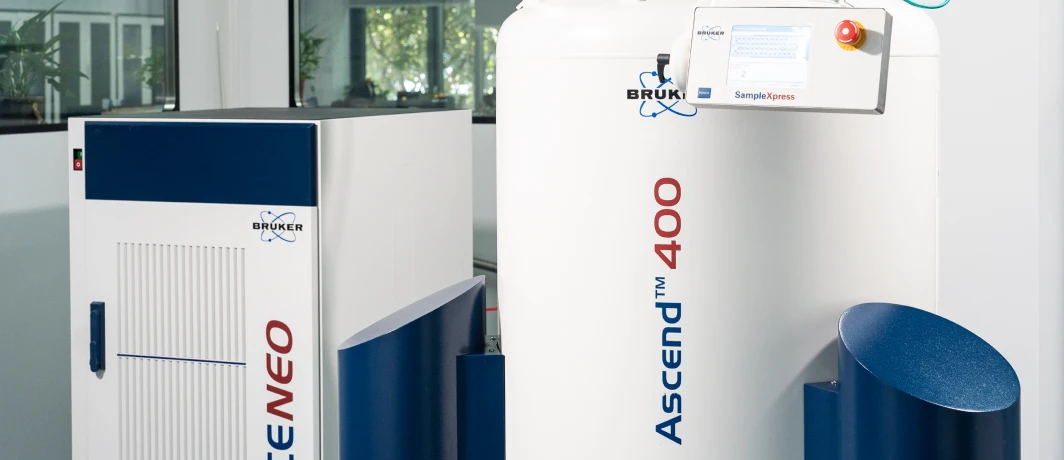
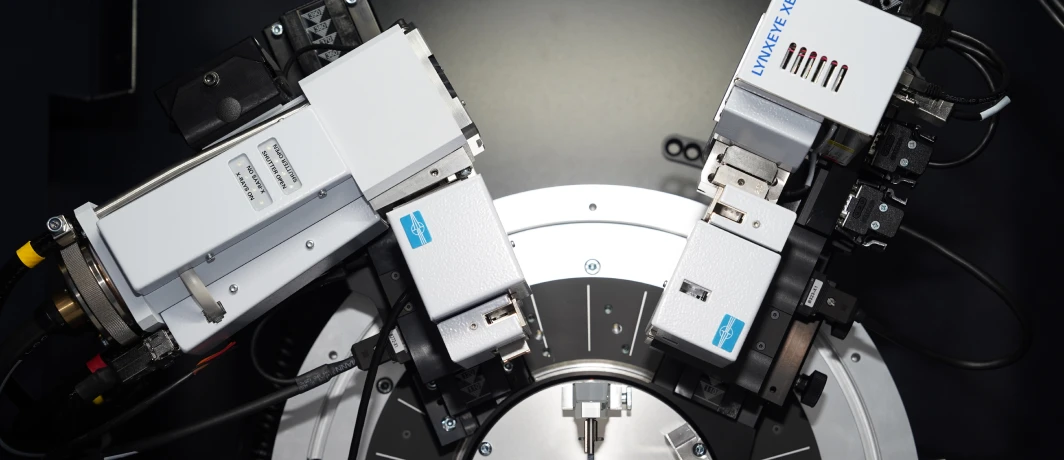
Advanced Instrumentation · Platform Support
Equipped with internationally recognized analytical instruments for inhalation products, with key platforms aligned with international pharmacopeial and regulatory requirements.

Regulatory Alignment · Global Compliance
In vitro BE evaluation has entered the era of rAPSD and dissolution, with testing methods and acceptance criteria aligned with the latest FDA guidance.
FDA Centralized Update of 18 Inhalation Product PSGs
The FDA updated 18 inhalation product-specific guidances (PSGs) in a single release (17 pMDIs + 1 DPI), covering major inhalation products. This represents the largest centralized revision since the launch of the PSG program and marks a systematic transformation in the paradigm of in vitro BE evaluation.
Dissolution: Upgraded from a Development Tool to a BE Endpoint
Dissolution has shifted from a development tool to a BE evaluation endpoint. It is mandatory for corticosteroid-containing products and, for combination products, is required for at least the ICS component.
rAPSD: Upgraded from Optional to Mandatory
Realistic aerodynamic particle size distribution (rAPSD) incorporates real-world variability across patient populations. The bracketing design combines multiple mouth-throat models, spanning pediatric to adult dimensions, with breathing profiles of different intensities. Extreme combinations are selected to cover the maximum range of variability with the minimum number of runs, and impactor size mass (ISM) is analyzed separately by population bioequivalence (PBE) for each combination.
Core Advantages
Regulatory alignment — data packages and reports are aligned with FDA / EMA / NMPA expectations, with multiple successful FDA on-site inspections, EU-QP audits, and CFDI on-site inspections.
Comprehensive technology platform — full-spectrum testing capabilities covering core inhalation and spray technologies, enabling one-stop completion of all in vitro BE studies, with in-depth experience in key technical steps.