






Introduction
The development of therapeutic peptides (such as GLP-1 analogues, liraglutide, and semaglutide) presents scientific complexity and regulatory stringency far exceeding those of traditional small-molecule drugs. The core challenges lie in: accurately confirming complex sequences and modifications, elucidating higher-order structures and aggregation states that are closely linked to function, comprehensively controlling process-specific and degradation-related impurities, and ultimately demonstrating a high degree of quality similarity between the proprietary product and the Reference Listed Drug (RLD) to satisfy the review requirements of global regulatory agencies.
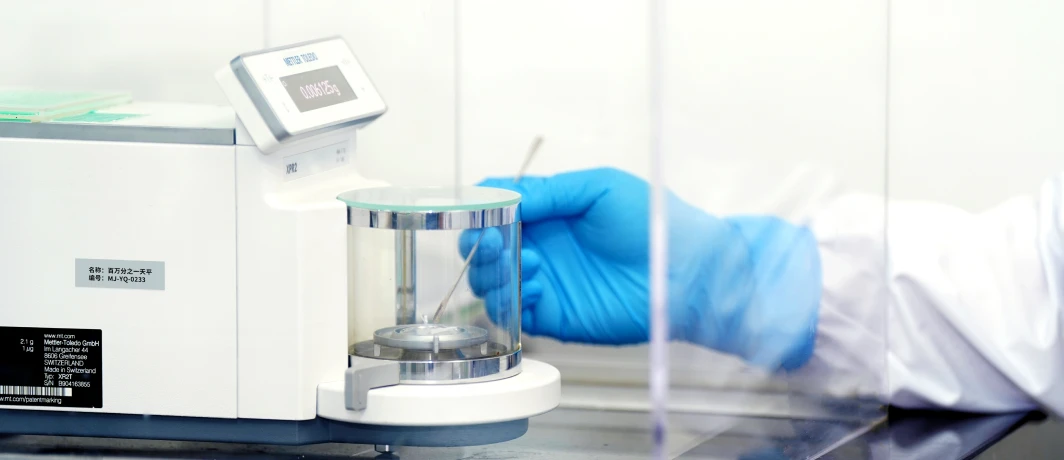
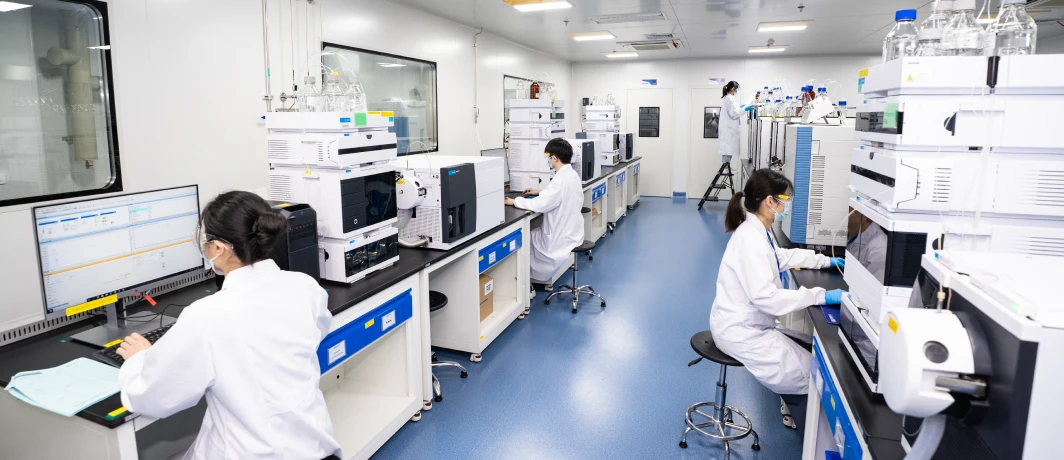
As an international pharmaceutical quality research technology platform, Milestone Pharma operates CNAS-accredited laboratories and has successfully completed a U.S. FDA on-site inspection. Leveraging a state-of-the-art characterization platform, deep regulatory expertise, and a mature project portfolio, Milestone has developed an integrated quality research solution spanning the full chain of peptide drug "structure – impurities – activity – formulation," supporting efficient advancement of products from preclinical development through to commercial launch across the entire lifecycle.
I. Full-Dimensional Structural Characterization
Precise Elucidation from Primary Sequence to Higher-Order Aggregation States
Adhering to the core principle that "structure determines function," Milestone employs a multi-technique orthogonal verification strategy to achieve systematic elucidation from microscopic chemical structure to macroscopic solution behavior, providing a complete evidence chain for molecular identity, conformational stability, and safety.
01 Primary Structure Confirmation: The Foundation of Molecular Identity
Accurate Molecular Weight Determination:
Using Orbitrap, Q-TOF, and other high-resolution mass spectrometry (HRMS) platforms, the intact molecular weight is accurately determined (precision up to 0.1 Da), confirming the target chemical composition. For example, in a semaglutide (4.11 kDa) project, the molecular weight was precisely verified against the theoretical value.
Amino Acid Sequence and Peptide Mapping:
Through LC-MS/MS peptide mapping analysis combined with specific enzymatic digestion using V8 protease and other enzymes, 100% amino acid sequence coverage is achieved, confirming sequence accuracy and effectively distinguishing isoleucine (Ile) from leucine (Leu). Edman degradation-based N-terminal sequencing is provided as an independent orthogonal method for sequence verification.
Precise Localization of Post-Translational Modifications and Conjugates:
Comprehensive analysis and quantification of disulfide bond pairing, fatty acid chain modifications (e.g., liraglutide), PEGylation sites, and modification degree distribution.
02 Secondary Structure Quantitative Analysis: The Cornerstone of Conformational Stability
Circular Dichroism (CD):
Provides the absolute percentage content of α-helix, β-sheet, β-turn, and random coil conformations, along with the characteristic ellipticity value at 222 nm — a critical metric for evaluating conformational comparability.
Fourier Transform Infrared Spectroscopy (FTIR) and Raman Spectroscopy:
Provide complementary vibrational information for Amide I and Amide III bands, particularly suitable for direct analysis of solid-state samples such as lyophilized powders, enabling cross-validation with CD data to ensure reliable conclusions.
03 Tertiary Structure and Conformational Stability: Ensuring Functional Activity
Advanced Spectroscopic Analysis:
Near-UV CD Spectroscopy and Intrinsic Fluorescence Spectroscopy: Sensitively monitor microenvironmental changes in aromatic amino acids such as tryptophan and tyrosine, reflecting the folding compactness and integrity of the tertiary structure.
In-Depth Nuclear Magnetic Resonance (NMR) Analysis:
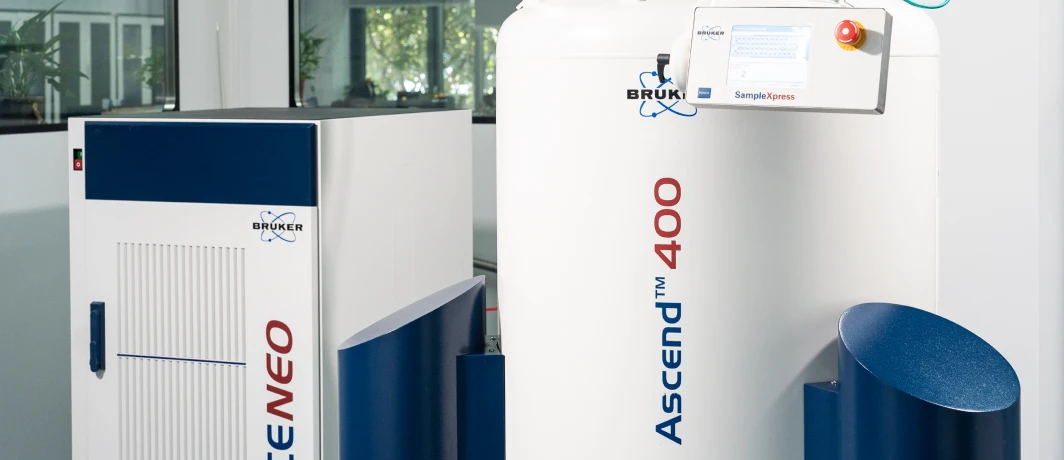
¹H-NMR Fingerprint: Provides atom-level resolution molecular "fingerprints" for rapid comparability assessment. Two-Dimensional NMR (e.g., 2D ¹H-¹³C HSQC): Precisely assigns the chemical environment of amino acid residues. Principal Component Analysis (PCA) and chemical shift difference statistics (e.g., Mahalanobis distance < 3.3, maximum shift difference < 8 ppb) are applied to objectively and quantitatively evaluate higher-order structure similarity to the RLD.
Quantitative Thermal Stability Assessment:
Differential Scanning Calorimetry (DSC): Directly determines the melting temperature (Tm) and enthalpy change (ΔH), quantifying overall conformational stability. Variable-Temperature Circular Dichroism / Differential Scanning Fluorimetry (TR-CD/DSF): Provides apparent Tm values for samples with low concentration or weak thermal signals, effectively supplementing and verifying DSC results.
04 Quaternary Structure (Aggregation State) and Solution Behavior Analysis: Critical for Safety Risk Control
Analytical Ultracentrifugation (AUC)
The "Gold Standard" method: Under near-physiological concentrations, without dilution or column matrix interference, AUC absolutely quantifies the proportions and sedimentation coefficients of monomers, dimers, and oligomers. This method has been incorporated into the 2025 edition of the Chinese Pharmacopoeia and represents an authoritative approach for evaluating aggregation-prone peptides such as GLP-1 analogues.
Asymmetric Flow Field-Flow Fractionation – Multi-Angle Light Scattering (AF4-MALS):
Effectively resolving the adsorption issues inherent to traditional SEC columns, this technique efficiently separates and absolutely determines the absolute molecular weight distribution and aggregate proportion of particles ranging from nanometer to micrometer scale, making it particularly suitable for analyzing large aggregates and complex samples with surface interactions.
NMR Diffusion-Ordered Spectroscopy (DOSY):
By measuring the apparent diffusion coefficients of different components, DOSY sensitively characterizes intermolecular interactions and early-stage aggregation phenomena. Statistical analysis (e.g., P > 0.05 indicating no significant difference) provides a sensitive metric for aggregation comparability.
II. In-Depth Impurity Profiling and Content/Activity Determination
Implementing QbD Principles to Ensure Safety and Efficacy
Milestone Pharma has established a comprehensive control strategy covering both process-related and degradation impurities in accordance with ICH, CDE (Center for Drug Evaluation, China), FDA, USP, and other relevant guidelines, and correlates these with biological activity.
01 In-Depth Impurity Profiling and Control
Process-Related Impurities:
Peptide-Related Impurities: Systematic identification and control of deletion sequences (n-1), insertion sequences, incompletely deprotected products, oxidation impurities, and others. Multiple orthogonal separation methods, including ion-pair RP-HPLC, ion-exchange chromatography (IEX), and capillary electrophoresis (CE), are employed. Exogenous Residuals: High-sensitivity methods are established to detect enzyme residues (e.g., enterokinase, with LOQ as low as 10 ppm), process reagent residues (e.g., Tris), host cell protein (HCP)/DNA, and other residuals.
Degradation Impurity Studies:
Major degradation pathways — including deamidation, hydrolysis, and oxidation — are clarified through forced degradation studies, and stability-indicating methods are established.
Specialized Impurity Resolution Technologies:
Chiral Impurity (D-Amino Acid) Analysis: Custom chiral chromatographic methods are developed to precisely monitor racemization impurities generated during synthesis.
Main Peak Embedded / Co-Eluting Impurity Resolution: ·Two-Dimensional Liquid Chromatography (2D-LC): Heart-cutting technology is applied to achieve physical separation and identification of complex co-eluting impurities. ·LC-HRMS/MS Quantification: For impurities undetectable by UV, such as insertion peptides, highly selective mass spectrometry-based quantification methods are developed (LOQ as low as 0.1%).
Polymeric Impurity Characterization: SEC-MS, SEC/AF4-MALS, AUC, and high-resolution mass spectrometry are comprehensively applied to perform structural identification and quantification of dimers and oligomers.
02 Content Determination and Biological Activity Evaluation
Accurate Content Determination:
Specificity-validated HPLC-UV/ELSD methods are established and validated to precisely determine active pharmaceutical ingredient content.
In Vitro Biological Activity / Potency Determination:
Cell-based or enzyme-based bioassay methods (e.g., cAMP reporter gene assay) are developed to confirm the functional activity of the drug product and provide critical evidence for comparability studies.
III. Comprehensive Formulation and Packaging System Quality Assurance
Ensuring Final Product Safety and Robustness
01 Formulation Development and Compatibility Studies
Drug-Excipient Compatibility: Evaluation of interactions between the API and excipients such as buffers, stabilizers, and preservatives.
Container-Closure System Compatibility (Extractables and Leachables, E&L): In accordance with ICH Q1A and USP <1663>/<1664>, high-sensitivity methods including GC-MS and LC-MS are employed to identify and quantify organic/inorganic leachables originating from packaging containers (e.g., vials, pre-filled syringes), followed by toxicological risk assessment.
02 Packaging System Performance Verification
Container Closure Integrity Testing (CCIT): Throughout the product lifecycle, recognized methods such as laser-based headspace analysis and high-voltage leak detection (HVLD) are applied to ensure durable, sterile barrier protection.
Routine Formulation Quality Control: A comprehensive suite of tests is performed, including clarity and color, pH, osmolality, visible particles/sub-visible particulates, bacterial endotoxins, and sterility testing.
03 Comprehensive Stability Studies
Long-term, accelerated, and stress-condition stability studies are designed and executed in accordance with ICH guidelines. Trends in critical quality attributes (CQAs) are monitored to provide a scientific basis for establishing shelf life and storage conditions.
IV. Milestone Pharma's Core Competitive Advantages
Authoritative Compliance and Quality System:
The Nanjing and Shanghai laboratories are both CNAS (ISO/IEC 17025) accredited and have successfully completed U.S. FDA on-site inspections as well as EU Qualified Person (QP) audits. The data management system strictly adheres to ALCOA+ principles and 21 CFR Part 11, ensuring the reliability of data for global regulatory submissions.
State-of-the-Art Integrated Instrument Platform:
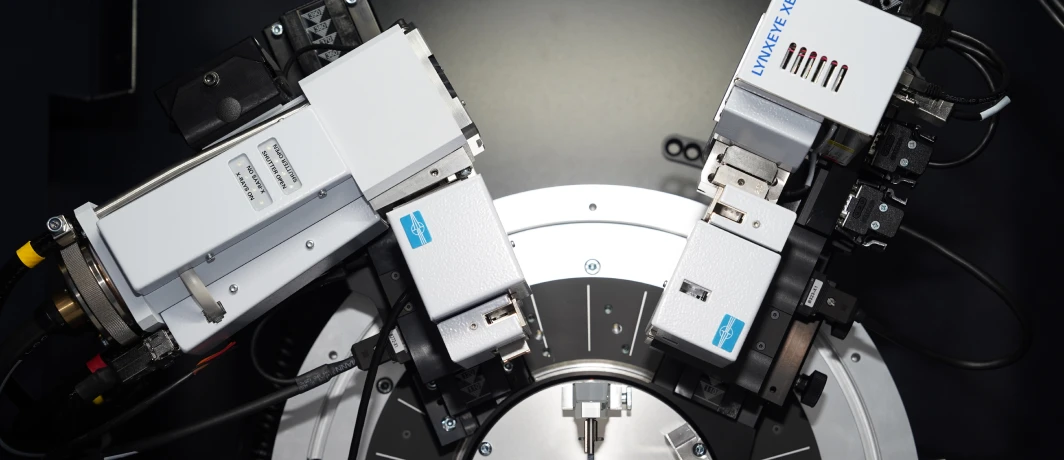
Milestone possesses a complete technical chain encompassing high-resolution mass spectrometry, multi-dimensional NMR, comprehensive spectroscopy, AUC, AF4/SEC-MALS, and cryo-electron microscopy (cryo-EM), providing the hardware capability to solve extremely complex analytical challenges.
Deep Project Experience and Expert Team:
Having served over 2,500 clients worldwide and completed more than 7,000 projects, Milestone has an extensive track record of successful cases in method development, impurity identification, and regulatory filing for complex peptides such as GLP-1 analogues. Over 40% of the project team members hold master's or doctoral degrees.
One-Stop, Customizable Service Model:
Covering the full spectrum from advanced characterization to routine testing, and from R&D through commercialization, Milestone offers flexible and efficient customized solutions, serving as a trusted extension of the client's laboratory.

